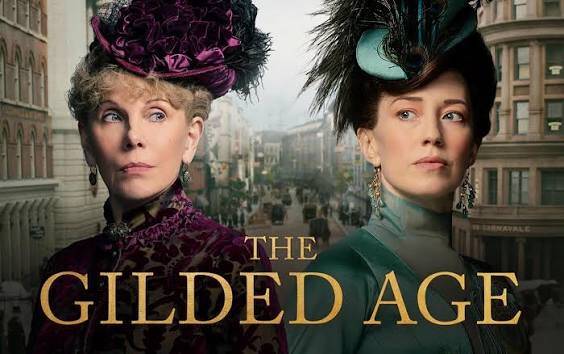
Forget the corsets for a minute.
One of the most interesting things about The Gilded Age isn’t the mansions, the diamonds or the dinner parties where one misplaced invitation can apparently trigger the social equivalent of a nuclear incident.
It’s the women.
More specifically, it’s a television world filled with women of different ages who want things.
Power. Love. Independence. Respect. Money. Social position. Purpose. Security. A second chance.
And they don’t stop wanting those things simply because they’re no longer 25.
That alone makes The Gilded Age worth watching for women over 40.
Come for the Mansions. Stay for the Women.
Created by Julian Fellowes and set in 1880s New York, The Gilded Age drops us into a city undergoing an enormous transformation.
Old money is colliding with new money. Fortunes are being made. Social rules are being challenged. Technology is changing daily life. And the people who have traditionally controlled New York society are discovering that money may buy a mansion, but it doesn’t automatically buy acceptance.
At the center of much of this glorious chaos are women.
Bertha Russell is determined to conquer New York society.
Agnes van Rhijn is equally determined to prevent people like Bertha from doing precisely that.
Ada Brook has spent much of her life living within the expectations placed upon unmarried women.
And around them are younger women trying to figure out whether they’re going to obey the rules they’ve inherited or start writing a few of their own.
The result is something surprisingly rare on television:
Mature women aren’t scenery. They’re driving the story.
And they’re complicated.
Thank goodness.
Women over 40 have earned the right to watch female characters who occasionally make questionable decisions without the script immediately sentencing them to a cardigan and a life of dispensing wisdom to younger people.
Bertha Russell Understands Something About Reinvention
Bertha Russell may be one of television’s most fascinating studies in ambition.
She has money.
What she doesn’t have is acceptance.
And rather than quietly accepting the social hierarchy she’s inherited, she decides she’s going to change her position within it.
Is she always likable?
Absolutely not.
That’s what makes her interesting.
Bertha isn’t asking permission to want more.
Her ambition also raises a fascinating question for modern women:
How much of what we call “too ambitious” in women is simply a woman refusing to remain where society has placed her?
Bertha’s methods can certainly be debated. But the desire underneath them is timeless.
She wants to determine the trajectory of her own life.
For women entering their 40s, 50s and 60s and contemplating career changes, businesses, creative projects, travel, relationships or completely different lives, there’s something strangely satisfying about watching a woman in an enormous hat decide she’s not staying outside the gate.
Agnes van Rhijn Is a Masterclass in Female Authority
Then there’s Agnes.
Played with delicious precision by Christine Baranski, Agnes represents the opposite side of the social battlefield.
She has status.
She has history.
She has opinions.
Good heavens, does she have opinions.
Agnes doesn’t need to raise her voice to control a room. Sometimes one facial expression is enough to make everyone reconsider their life choices.
But underneath the humor is something more interesting.
Agnes is a mature woman occupying a position of authority in her household and social world.
Television has historically had an uncomfortable habit of making older female characters invisible, maternal or peripheral.
Agnes is none of those things.
She matters.
Her choices have consequences.
Her personality affects everyone around her.
She isn’t trying to appear younger, either. Her power comes partly from experience.
That’s refreshing.
Ada Quietly Challenges Another Old Story About Women
Ada may initially seem less powerful than Agnes or Bertha.
Look closer.
As an unmarried woman, Ada represents something that was becoming increasingly interesting during the actual Gilded Age: women beginning to imagine lives outside conventional marriage.
Historical accounts of the period show that remaining unmarried became a viable path for some women who wanted greater freedom to pursue work or public life. Opportunities were still severely limited, but the boundaries around women’s lives were beginning to shift. (Smithsonian Magazine)
That makes Ada particularly interesting through a Forty Plus and Childfree lens.
Her life raises a question that remains surprisingly relevant:
Who decided there was only one correct blueprint for a woman’s adulthood?
Marriage.
Children.
Household.
Repeat.
For generations, those milestones weren’t simply presented as options. They were treated as the definition of successful womanhood.
Women today have far more freedom to construct lives around careers, creativity, friendships, travel, entrepreneurship, relationships, community or simply the freedom to decide what matters to them.
Ada’s world reminds us how historically recent many of those choices actually are.
The Real Luxury Isn’t the Dresses
Let’s acknowledge the obvious.
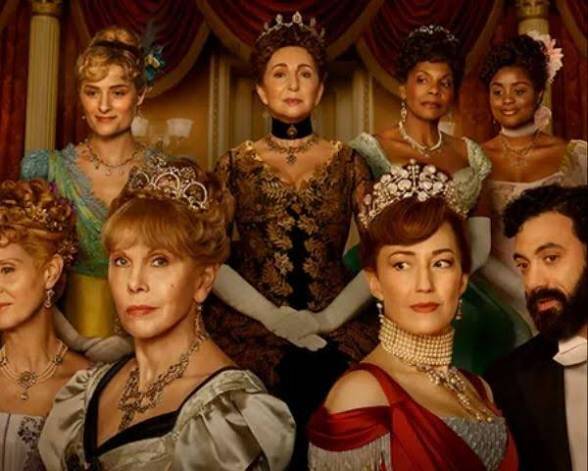
This show is visually gorgeous.
The architecture.
The interiors.
The jewelry.
The gowns.
The dinner tables.
The hats large enough to require their own ZIP codes.
The Gilded Age is unapologetic escapism.
But here’s where it gets interesting.
The luxury isn’t merely decorative. It’s part of the power structure.
During the actual Gilded Age, extravagant consumption became a way for wealthy families to demonstrate their social position. Sociologist Thorstein Veblen would later popularize the term “conspicuous consumption” to describe spending designed partly to display wealth and status. (Smithsonian Magazine)
Suddenly those absurdly elaborate dinner parties make more sense.
They’re not really dinner parties.
They’re corporate mergers with lobster.
Money Is Practically a Character
Women interested in financial independence may find another layer of the show particularly fascinating.
Money determines almost everything.
Who gets invited.
Who gets married.
Who gets ignored.
Who has choices.
And, especially for women, who has independence.
Historically, women’s economic options during this period were dramatically more restricted than they are today. Marriage could profoundly affect a woman’s legal and financial autonomy, while divorce and independent careers were difficult to pursue. (Smithsonian Magazine)
Watching from the 21st century makes something very clear:
Financial independence isn’t just about having money. It’s about having choices.
That’s a conversation worth having at any age.
But after 40, it can take on new urgency.
Retirement planning, investing, entrepreneurship, career changes and building wealth aren’t simply financial topics.
They’re freedom topics.
The Show Understands That Reinvention Doesn’t Belong to the Young
This may be the biggest reason I recommend The Gilded Age for women over 40.
Its world is constantly changing.
Some characters resist that change.
Others exploit it.
Others are terrified by it.
And some discover opportunities that couldn’t have existed a generation earlier.
That feels remarkably modern.
Because life after 40 can contain its own changing social landscape.
Maybe you’re changing careers.
Maybe you’re dating again.
Maybe you’re starting a business.
Maybe you’re finally traveling.
Maybe you’re leaving a relationship.
Maybe you’re becoming financially independent.
Maybe you’re creating something you’ve postponed for twenty years.
Or maybe you’ve simply reached the glorious age when you realize that everyone else’s expectations don’t automatically deserve a vote.
That’s not a crisis.
That’s authorship.
And Yes, There’s Romance
Fortunately, all this social analysis comes wrapped in romance, attraction, longing, scandal and beautiful people exchanging emotionally loaded glances across enormous rooms.
We are civilized, but we have needs.
What I appreciate is that romance exists within a larger world of female ambition and identity.
Women aren’t interesting solely because somebody desires them.
They’re already interesting.
Love simply becomes another part of their stories.
That’s a distinction entertainment aimed at grown women should make more often.
The Gilded Age Wasn’t Actually Very Golden
There’s another reason the series becomes more interesting once you know a little history.
“Gilded” doesn’t mean solid gold.
It means something covered with a thin layer of gold.
The phrase captured an era of astonishing wealth sitting alongside enormous inequality, political corruption and social upheaval. The glamorous surface concealed a much messier reality underneath. (Smithsonian Magazine)
Sound strangely familiar?
That’s why the show isn’t simply historical escapism.
It’s also about status anxiety.
New wealth.
Social climbing.
Public image.
Economic inequality.
Who belongs.
Who gets excluded.
And what happens when people who once controlled the gates realize those gates aren’t holding anymore.
Remove the corsets, add smartphones, and suddenly the 1880s don’t feel quite so distant.
Why I Recommend The Gilded Age for Women Over 40
Watch it for the mansions.
Watch it for the costumes.
Watch it because Christine Baranski can communicate an entire paragraph of disapproval with approximately three millimeters of eyebrow movement.
But also watch it for something deeper.
Watch women of different ages navigate power, money, friendship, marriage, independence, ambition and changing expectations.
Because perhaps the most interesting message hiding underneath all that silk is this:
There is no expiration date on becoming more fully yourself.
Women don’t stop evolving at 40.
Or 50.
Or 60.
Our ambitions don’t suddenly evaporate. Our curiosity doesn’t disappear. Our desire for love, independence, adventure, purpose or success doesn’t become inappropriate.
If anything, experience can make us much clearer about what we actually want.
And that may be the real luxury The Gilded Age accidentally celebrates.
Not the mansion.
Not the diamonds.
Not the ballroom.
Choice.
Your Turn
Are you watching The Gilded Age?
And which woman fascinates you most: Bertha, Agnes, Ada or someone else?
Tell me in the comments. And if you’re looking for more smart, addictive shows featuring women with actual life experience, stick around. We’re building a watchlist where women over 40 aren’t supporting characters in somebody else’s story.
They’re the main event.
#WomenOver40 #FortyPlus #ChildfreeWomen #TheGildedAge #LifeAfter40 #WomenOver50 #SecondAct #MidlifeWomen #WomenSupportingWomen #PeriodDrama
Add comment
Comments